
[ENG]
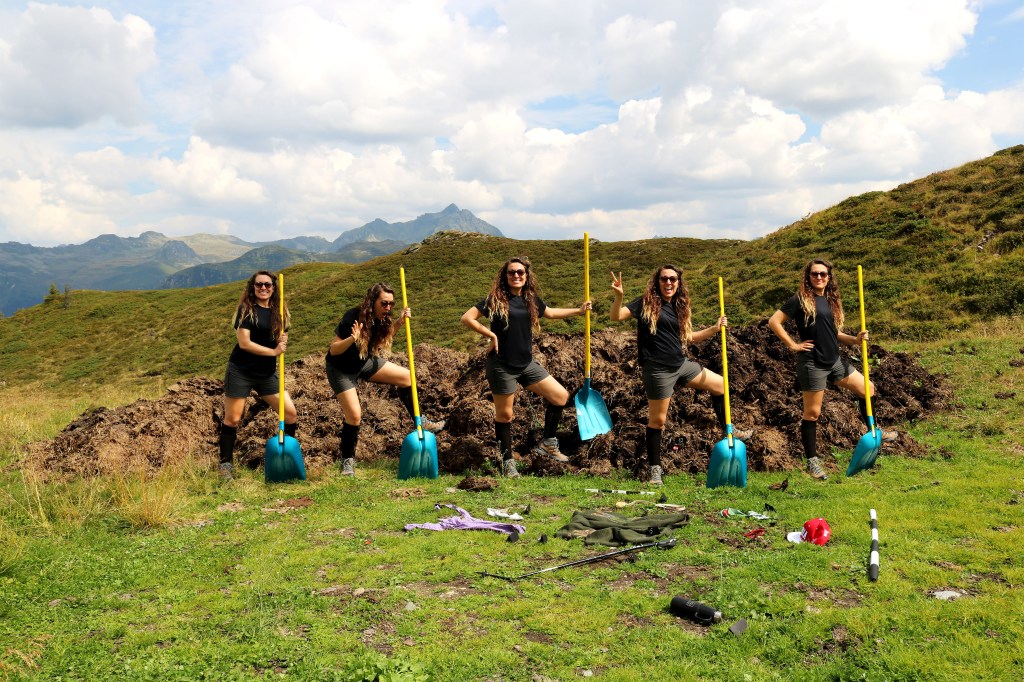
On 29 August 2024, a group of archaeologists and palaeontologists, led by Dr. Irene G. Villanueva, initiated an excavation in the Alpe Nova area, located in the Silvretta mountain range in the Montafon valley of Vorarlberg, Austria. During this excavation, a series of artefacts and garments were discovered beneath a fossilised pile of cow dung, suggesting the existence of a new evolutionary variant of Homo sapiens, known as Homo tourist sapiens montafonis, or more commonly referred to among scientists as Tourist sapiens.
The first object, a mini pennant of Austria in an almost perfect state of preservation, was found by chance by an artist who was digging through the dung for artistic purposes. This unusual discovery led the artist to contact Dr Villanueva’s team who, at the time, were in the region studying the remains of structures connected to what is believed to have been an ancient civilisation that inhabited these mountains in winter, known to experts as the Après-Ski civilisation.

The process of excavating and analysing the archaeological remains took 3 months to complete. Once catalogued and prepared for safe transport, the artefacts were sent to the research centre Die Vergangenheit ist Wichtig (VIW) in Upper Austria, and subsequently to the city of Bregenz in Vorarlberg, in the Thurn und Taxis palace, for public display and dissemination.
Homo tourist sapiens montafonis: Die Entdeckung
[DE]
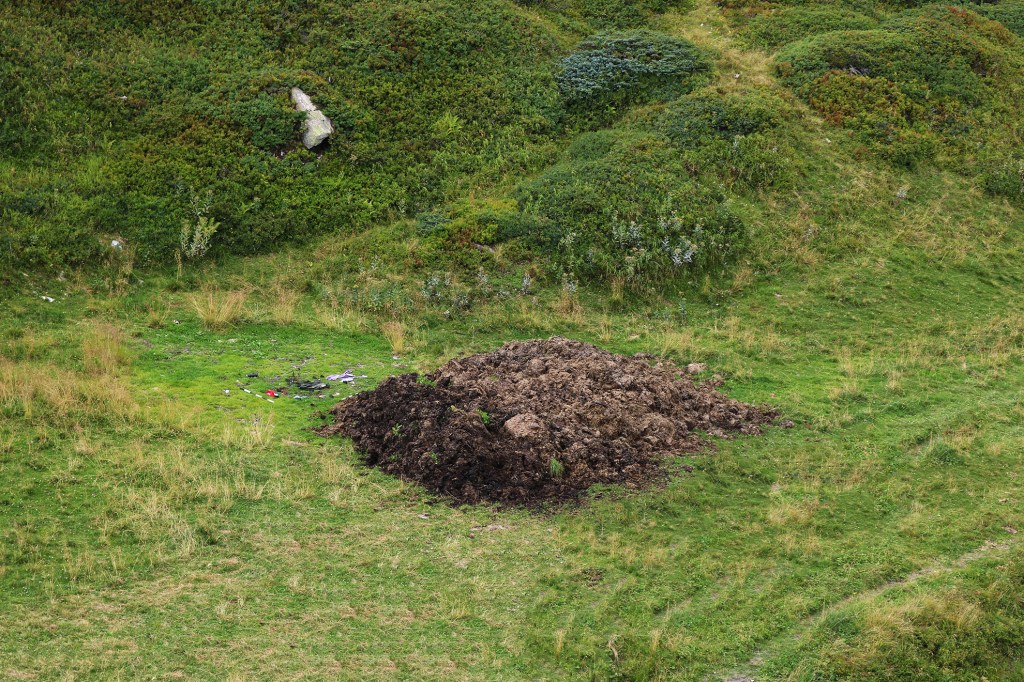
Im Sommer 2024 begann ein Team aus Archäologen und Paläontologen unter der Leitung von Dr. Irene G. Villanueva mit einer Ausgrabung in der Region Alpe Nova in der Silvretta-Gebirgskette im Montafon-Tal in Vorarlberg, Österreich. Bei dieser Ausgrabung entdeckten sie unter einem fossiliertem Hügel aus Kuhdung eine Reihe von Artefakten und Kleidungsstücken, die auf die Existenz einer neuen evolutionären Variante des Homo sapiens hindeuten, bekannt als Homo tourist sapiens montafonis, oder in wissenschaftlichen Kreisen einfach Tourist sapiens genannt.
Das erste Objekt, ein Mini-Fähnchen von Österreich, das sich in einem nahezu perfekten Erhaltungszustand befand, wurde zufällig von einer Künstlerin entdeckt, die den Dung für künstlerische Zwecke aufsammelte. Dieser ungewöhnliche Fund führte dazu, dass die Künstlerin das Team von Dr. Villanueva kontaktierte, das sich zu diesem Zeitpunkt in der Region aufhielt. Dieses untersuchte gerade Strukturen einer alten Zivilisation, die im Winter in diesen Bergen lebte und unter Experten als Après-Ski-Zivilisation bekannt ist.
Der Prozess der Ausgrabung und Analyse der archäologischen Überreste dauerte drei Monate. Nachdem die Artefakte katalogisiert und für einen sicheren Transport vorbereitet waren, wurden sie an das Forschungszentrum Die Vergangenheit ist Wichtig (VIW) in Oberösterreich und später in die Stadt Bregenz in Vorarlberg zum Palais Thurn und Taxis für eine öffentliche Ausstellung gesendet.
Homo tourist sapiens montafonis: El Descubrimiento
[ESP]
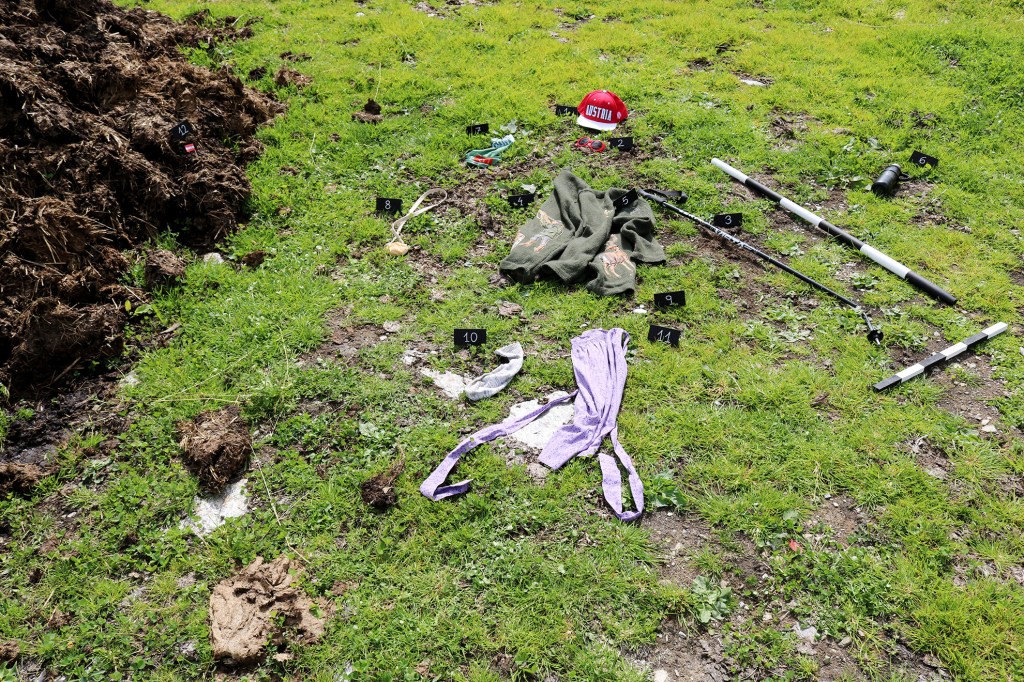
El 29 de agosto de 2024, un grupo de arqueólogos y paleontólogos, liderados por la Dra. Irene G. Villanueva, inició una excavación en la zona de Alpe Nova, ubicada en la cordillera Silvretta, en el valle de Montafon, en Voralberg, Austria. Durante esta excavación, debajo de una montaña fosilizada de estiércol de vaca, se descubrieron una serie de artefactos y prendas que sugieren la existencia de una nueva variante evolutiva del Homo sapiens, conocida como el Homo tourist sapiens montafonis, o más comúnmente llamado entre los científicos como Tourist sapiens.

El primer objeto, un mini banderín de Austria en un estado casi perfecto de conservación, fue hallado de manera fortuita por una artista que estaba extrayendo estiércol con fines artísticos. Este inusual descubrimiento, llevó a la susodicha artista a contactar con el equipo de la Dra. Villanueva que, en ese momento, se encontraba en esta región estudiando los restos de estructuras conectadas con lo que se cree que fue una antigua civilización que moraba estas montañas en invierno, conocida entre los expertos como la civilización Après-Ski.
El proceso de excavación y análisis de los restos arqueológicos llevó 3 meses de completar. Una vez catalogados y preparados para su traslado seguro, los artefactos fueron enviados al centro de investigación Die Vergangenheit ist Wichtig (VIW) en Alta Austria, y posteriormente a la ciudad de Bregenz, en Voralberg, en el palacio Thurn und Taxis, para su exhibición y divulgación pública.

 TOURIST SAPIENS